
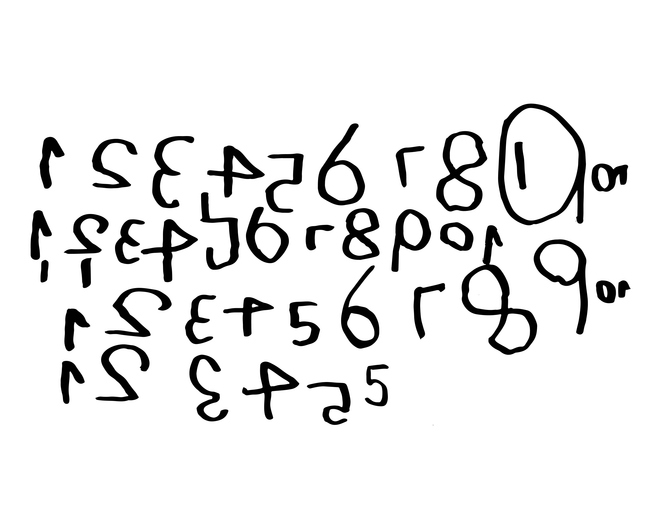
Sloppy handwriting or an awkward pencil grip may be a sign of a deeper problem than carelessness or bad habits. These traits are also indicators of dysgraphia, a neurological condition that makes writing difficult, even painful.
Lawrence Kloth, co-founder of Reading Success Plus, says the disorder has potentially lifelong consequences. Lawrence was diagnosed with dysgraphia as a youth.
“When you don’t have the ability to write stuff down, and you can’t get your thoughts on paper, that really affects your ability to communicate at the level you’re capable of doing. There’s a huge discrepancy between their reasoning skills and verbal skills and what they write on the page.”
He gave the example of an eighth grader who writes at a second-grade level.
“They may be thinking at an eighth-grade, or even sophomore level, but what they put on paper looks like an elementary-school student wrote it. That’s going to affect their grades, and those grades could impact their entire future. But it doesn’t reflect their much more developed thought processes and understanding of the material.”
Defining dysgraphia
Dysgraphia is a neurological disorder that causes an individual’s writing to be distorted, garbled, or otherwise incorrect. It may also make it difficult for a person to plan and organize written language, leaving them unable to put the ideas in their head onto paper. It does not indicate a lack of effort or attention, and it is not in any way a sign of low intelligence. Rather, it is a problem with motor skills that can be alleviated with therapy. (Note that not all sloppy handwriting or organization problems are caused by dysgraphia.)
Signs of dysgraphia include:
- Illegible handwriting.
- Inconsistent letter formation or spacing between letters and words. “Spacing could be very squished or very far apart,” Lawrence says. “They might make weird letter or number formations. They might do letters bigger or smaller.”
- An awkward, even painful pencil grip. “Their grip often is very tight, so they fatigue quickly,” Lawrence explains. “They might write for a page, then have to rest for 10 minutes. It’s start, stop, start, stop. That makes it difficult to complete their work on time.”
- Problems with spelling, skipping letters, or writing grammatically correct sentences.
- Slow, labored writing.
Because they both cause spelling problems, dysgraphia and dyslexia are sometimes confused, and some individuals do have both (dyslexia, dysgraphia, and ADHD are often found in the same individual). However, they are distinct disorders and have different treatments. Dyslexia primarily affects reading, while dysgraphia affects motor skills. Dyslexia is managed through tutoring and instruction, while dysgraphia is treated primarily with occupational or physical therapy, though some academic interventions can be helpful.
Diagnosis
Dysgraphia is generally identified in elementary school-aged children when someone observes a problem with their pencil grip. It’s certainly noticeable by upper elementary, when writing assignments become more difficult and the slowness of writing becomes more obvious. Sometimes dysgraphia doesn’t appear until adulthood, but those cases are usually caused by some sort of brain trauma. Dysgraphia in children, while also neurological, is probably rooted in developmental or genetic causes.
Diagnosis usually begins when the parent or teacher becomes concerned about a student’s progress. Standardized tests may point to writing deficiencies, but observations of the child’s work are more likely to be the first clue that something deeper is wrong. From there, the parent may request an examination from an educational psychologist within the school system or privately. An occupational therapist can evaluate the student’s fine motor skills. This article on the website Understood explains in detail many of the tests that might be used.
The most common treatment for dysgraphia is physical or occupational therapy. Therapists will work to improve the hand strength and fine motor coordination needed to write by hand, as well as teach the correct arm position and body posture for writing. Educational therapy can teach students strategies to work around their weak spots and help them reduce frustration.
Children with dysgraphia can also benefit from practices used to help other students improve their writing. Those include instruction in spelling rules, punctuation, sentence and paragraph construction, and the use of graphic organizers to help translate their ideas onto the page. The writing program at Reading Success Plus teaches these skills in a one-on-one setting that lets the student learn at their own pace.
Accommodations
Students with dysgraphia may be eligible for an IEP (Individualized Education Program) or 504 plan, depending on the level of their disability. (IEPs do not categorize the disability as dysgraphia, but instead call it written expression disorder.) Either could provide the child with accommodations that help them work around their disability so they can let their ideas shine. Those accommodations include:
Extra time: Because their motor skills are less developed, students with dysgraphia write more slowly than their peers. Giving them more time to complete an assignment or test allows them to show what they know, which is the true purpose of the task.
Oral exams: Students with dysgraphia may understand the lesson perfectly, know all the facts and concepts, and be able to interpret a text insightfully, yet be unable to convey those thoughts because they cannot write them out. In an oral exam, they can articulate those ideas before they hit that roadblock. Grades will then more fairly reflect the student’s mastery of the material.
Speech to text: This is the same principle as oral exams, only using technology to express the student’s thoughts by using a computer to put them on paper. Alternatively, a student could have a scribe, a person who would write down the student’s responses. If an oral exam is a way to stop short of the roadblock, speech-to-text is a way of driving around it.
Typing: Dysgraphia affects typing as well as writing, but usually to a lesser extent. Keyboarding reduces frustration and eliminates the physical discomfort of holding a pencil.
Note-taking: Lawrence says he had someone take notes for him in high school and college. “For me, taking notes was excruciatingly difficult. I had to write my notes down, look at the board, remember it, come down and write it, over and over again. That makes it really difficult, especially for kids who also have dyslexia and ADHD. It’s incredibly difficult to multitask in that way, especially when you’re dealing with a couple of weaknesses at once.”
If you can’t get a note-taker, Lawrence recommends asking for a copy of the teacher’s notes. A similar accommodation would be to allow the student to record lectures.
Like any other accommodations, these do not give the disabled student “an unfair advantage.” They simply level the playing field.
“We want these kids to understand the material and work at the highest level they possibly can,” Lawrence says. “They should be evaluated on what they know, not on how fast they can write.”
Paths to success
Dysgraphia doesn’t just hamper academic performance – it can affect a person’s emotional well-being. The stress of bad grades, the embarrassment of falling behind your peers, and the fear of a hopeless future all tear down a student’s self-esteem.
But none of that is inevitable. While dysgraphia cannot be cured, it can be managed. With the support of family, teachers, and friends, plus the right therapies and accommodations, the student with dysgraphia can thrive. For proof, look at the lives of mystery writer Agatha Christie, scientist Albert Einstein, “Harry Potter” star Daniel Radcliffe, director Steven Spielberg, and actor Tom Cruise, all of whom have or had dysgraphia.
Yes, dysgraphia is a formidable obstacle. But it’s an obstacle that, with the right support, your child can conquer.
To learn more
Find more information about dysgraphia in these articles online:
The difference between dysgraphia and dyslexia
Treatment for kids with dysgraphia
Classroom accommodations for dysgraphia
Reading Success Plus has offices in Grand Rapids and Troy and offers one-on-one tutoring online or in person in reading, math, and writing. You can get more information at readingsuccessplus.com. To contact us, call 833-229-1112 or go online to https://readingsuccessplus.com/#contact.